
An alarm response service sends a licensed security officer to your premises when your alarm activates, to check the site, deal with what they find and secure the property. When choosing a provider, there’s one question nearly every business and homeowner asks first:
“What’s your average response time?”
It’s an understandable question. Many providers are quick to answer it with a bold promise:
“30 minutes, guaranteed.”
Across the UK, businesses and homeowners are regularly promised alarm response times that providers can’t actually deliver. If you’re reading this, you may have experienced that first-hand.
Why do providers promise fast alarm response times?
Response times are often treated as the best way to compare alarm response services. That emphasis leads to overpromising.
The pressure to secure contracts means many providers quote their best-case response times. Some guarantee their lowest times without calculating whether they are even possible. That can hold up in theory, until an alarm goes off during rush hour, or the officer is already attending another site 20 miles away.
The result is missed service levels, inconsistent performance and a contract spent wondering why expectations aren’t being met.
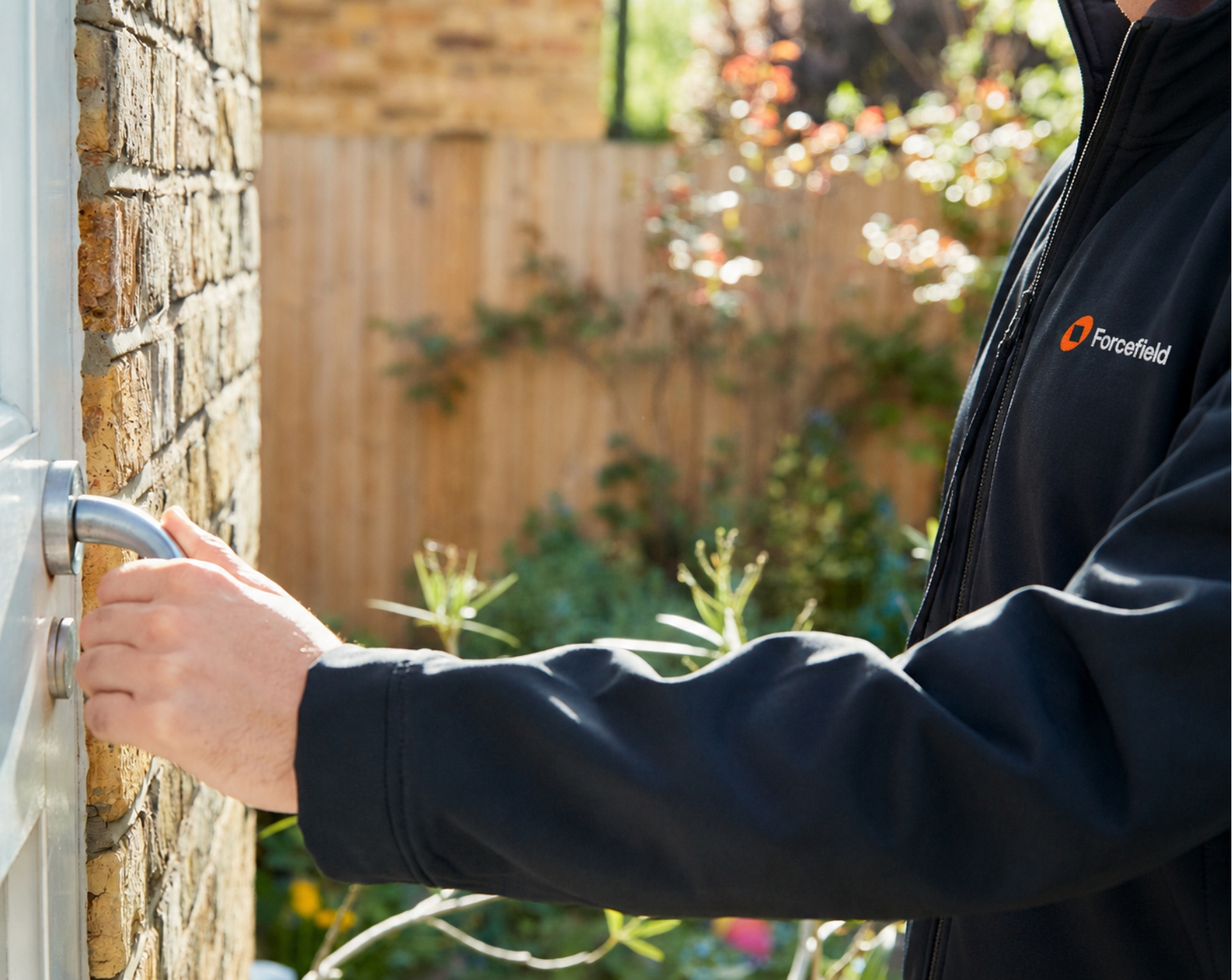
What affects how quickly someone can respond?
Alarm response seems straightforward: the alarm goes off, someone attends. In practice, there are several steps between the two, and each one can add time. Many of them are outside the provider’s control.
Alarm delays: Most alarm systems are programmed with a built-in delay (often 30 seconds or more) before the signal is triggered, to reduce false alarms.
Signal transfer: Once the alarm activates, the signal travels to the monitoring station. If the monitoring station is manually operated, this adds more delay. In some cases, it can take several minutes before the response provider is notified.
Dispatch: The response provider then needs to identify and send the best-placed officer. If keys are required, the officer may need to collect them from a secure key vault before attending the site.
Travel time: Only then does travel begin. Traffic, weather, time of day and distance can all have a big impact here.
With so many moving parts, it’s unrealistic, and often misleading, for any provider to guarantee consistent response times across an entire estate. Every location is different. Unless the process is automated, integrated and well coordinated, delays will happen.
Top tip: A trusted provider will be honest about what they can deliver, and focus on improving consistency and transparency.
How do the best providers improve response times?
No one can guarantee a set response time. What providers can control is how efficient their processes and systems are, and how consistent their performance is over time. Three things make the biggest difference.
1. Using technology to remove manual steps
Manual processes slow things down. Taking phone calls, writing up reports and relaying details between people all add time and room for error.
Modern providers should use technology to:
- dispatch jobs automatically to officers, without needing a phone call
- check the alarm call and cancel false alarms, saving unnecessary call-out costs
- provide real-time updates to everyone involved, including live officer tracking
- capture detailed data from every incident for faster reporting and trend analysis
At Forcefield, a call is triggered automatically to your emergency contact as soon as an alarm goes off. If they confirm all is well, the response is cancelled. If not, we send an officer.
2. Integrating directly with alarm monitoring stations
Many delays happen before the response begins, when the alarm monitoring station passes details to the response provider by phone. This can take several minutes, depending on each organisation’s processes.
The best providers integrate directly with alarm monitoring stations through an API (application programming interface), which lets the two systems share alarm data automatically. Forcefield integrates with monitoring centres including Security Monitoring Centres, so alarm call data reaches us in as little as 0.2 seconds and the response can start from the very first moment.
Top tip: Ask whether a provider has established integrations with alarm monitoring stations, and whether they use technology to automate their service.
3. A strong local presence, delivered nationally
Even with great technology, you still need people on the ground. A well-managed network of local officers, covering a wide geography and able to flex to demand, makes a big difference to how quickly someone can attend.
Providers that rely on a limited number of local teams can become stretched, especially at peak times or in rural areas.
The maps below compare a traditional network model of around 45 operating bases with one of around 200. Which do you think would respond more quickly to alarm calls nationwide?


Forcefield responds to alarm activations through a network of 200+ partner companies, covering 99.8% of UK postcodes.
What should you look for in an alarm response provider?
Data that explains why alarms are triggered
A good provider will tell you how often your alarm is triggered and help you understand why.
You should expect insight into:
- how many callouts are false alarms and how many are genuine incidents
- where patterns are emerging across sites
- what you can do to reduce unnecessary callouts
This should come alongside detailed job reports after every alarm call, showing the response time and what was found at the site.
If your provider is called out to a site more often than expected, this data is key to understanding the risk at that site and finding the root cause of avoidable alarm calls. It also helps you strengthen your overall risk strategy, avoid disruption and stay compliant with insurance requirements.
What to look for: Data that reports what happened and helps you act to improve outcomes.
Accreditations that show credibility
Speed matters, and so do safety, compliance and professionalism. Accreditations show that a provider’s people, processes and partners meet recognised standards. At a minimum, you should expect:
- National Security Inspectorate (NSI) Gold: covering quality management (ISO 9001), keyholding and alarm response (BS 7984) and staff screening (BS 7858, BS 7499)
- Security Industry Authority Approved Contractor Scheme: the government-backed benchmark for companies providing keyholding and guarding services
What to look for: Providers who are open about their accreditations and can show evidence of meeting them. You can see ours here.
One provider with nationwide reach and consistent standards
A common frustration we hear from new clients is that their previous provider said they had coverage, until they didn’t.
Some organisations try to solve this with a patchwork of local providers, one for each region. That creates a new problem. Each provider reports in different formats, on different schedules and against different KPIs, so it becomes very hard to spot patterns, check compliance or make confident decisions about budget and risk.
Working with a single provider across your estate gives you:
- a well-managed national network with full UK coverage
- standardised reporting and performance data across every site
- one point of contact and strong oversight of the partners delivering the service
What to look for: A provider who can show how they maintain consistent standards, communication and performance at scale.
What should homeowners look for?
If you’re looking for alarm response for your home, the same principles apply. Your home is your most valuable asset, and when your alarm goes off you want to know someone you trust is on their way.
Look for a provider that:
- has local officers near you, wherever you live, in both urban and rural areas
- holds your keys securely, so the officer can get in without waiting for you or a neighbour
- calls your emergency contact automatically and cancels the response if all is well
- sends you a report after every callout, outlining the response timeline, whether there were any incidents and how they were handled
Find out more about keyholding and alarm response for your home.
Final thoughts
Fast alarm response times matter, but promises don’t always match performance.
What makes the difference is a provider that’s open about what they can and can’t guarantee, and puts the right systems, people and processes in place to deliver a reliable service.
We believe trusted partnerships are built on transparency and data. If your current provider isn’t delivering on either, it might be time to rethink your approach.
Learn more about our alarm response service, and how it works alongside keyholding.


